Warehouse robotics requirements, interfaces and acceptance evidenceOpen the RFQ checklist
Global warehouse operating environments for AMR evaluation
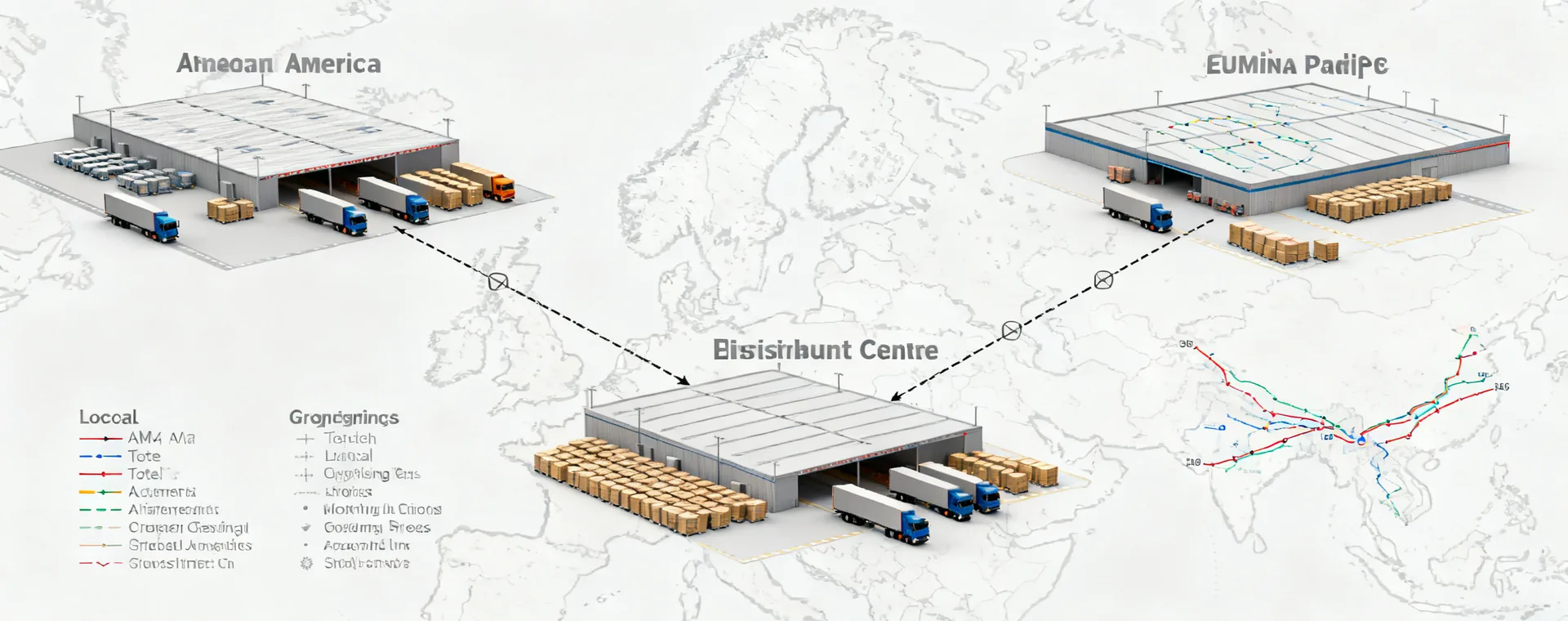
Regional requirement lenses

Ambi Robotics operating profiles viewed by site context

Geography changes machinery rules, network practice, labor interaction, temperature exposure and service access. It does not replace the warehouse workload. Each concept must connect local obligations to SKU depth, order release, load mix, peak duration and exception recovery.

The regions below are evaluation lenses, not statements of office locations, installed base or identical commercial coverage.

Regional review tabs

Carry local requirements into the same engineering record

Use the tabs to frame discovery. Applicable laws, standards, electrical practice and conformity routes must be confirmed for the model, project entity and final site.

Facility and operating review

Document fire routes, emergency access, pedestrian interaction, floor condition, wireless design and the customer safety process. Powered-equipment and machinery requirements depend on the actual configuration and jurisdiction.

E-commerce

Cutoff-driven peaks, small-order depth, dense stations and fast backlog recovery.
Manufacturing supply

Line-side priority, returnable containers, delivery confirmation and manual fallback.

Grocery distribution

Store sequence, replenishment timing, temperature transitions and dispatch windows.

Brownfield expansion

Live traffic, limited work windows, interface coexistence and phased release.

Conformity and integration review

Separate machinery conformity, functional-safety design, company management systems and any third-party product certificate. Interface, risk-assessment and validation evidence need revision control and clear legal-entity ownership.

Dense fulfillment

Balance cube use with safe access, maintenance isolation and recoverable routing.

Retail replenishment

Sequence store demand while protecting load identity and dispatch cutoff.

Controlled products

Document access, traceability, intervention authority and audit records.

Mixed manual flow

Define crossings, scanner fields, operating modes and safe restart behavior.

Growth and site-variation review

High change rates can favor phased robotics, but layout adaptation does not remove fleet-traffic, charging, spare or controls dependencies. Test normal and peak demand against the actual building and local support model.

Rapid assortment change

Review SKU velocity, tote compatibility, slotting assumptions and station balance.

Multi-shift operations

Link duty cycle, charging opportunity, maintenance windows and degraded capacity.

Temperature exposure

Confirm battery, sensor, material and condensation limits for each operating zone.

New-build phasing

Keep future expansion points visible without assigning untested capacity to them.

Profile emphasis chart

Compare engineering attention, not unsupported market percentages

These qualitative bars show where discovery effort usually concentrates for four workload patterns. They are not measured Ambi Robotics performance data. A project-specific assessment replaces every label with source data and a dated assumption register.

Flexible robotics can support phased change where demand is volatile. Fixed automation can provide deterministic capacity where flow is stable. Resilience may require buffers, alternate routes or spare capacity that reduce a headline peak. The selection record should state which outcome the operation values and which disruption cases it must tolerate.

E-commerceVery high peak/congestion review

Order depth, release waves, station balance and backlog clearance.

GroceryHigh sequence/environment review

Store order, freshness window, temperature and dispatch sequence.

ManufacturingVery high continuity review

Priority delivery, takt dependency, line-side confirmation and fallback.

Cold environmentHigh equipment-limit review

Battery behavior, sensors, materials, condensation and human access.

Method comparison

State the trade-off before locking the concept

Two industry disputes appear repeatedly in warehouse robotics selection. The table records opposing positions so procurement and operations can choose which outcome they value; it is not a ranked vendor comparison.

DisputePosition APosition BWhat must be recorded
Fixed automation vs flexible roboticsFixed automation favors deterministic capacity and mature controls when SKU velocity and order lines per hour stay stable across a multi-year horizon.Flexible AMR/AGV fleets favor phased cutover, layout change and goods-to-person adaptation when demand is volatile.Peak duration, buffer occupancy, replenishment and the longest interruption each zone can tolerate.
Peak rate vs operational resilienceA higher headline pick rate can look attractive when the 4-hour peak window is measured under clean routes and full station staffing.Resilience may require alternate routes, spare robots, charger redundancy or lower usable peak so recovery remains controlled.Disruption trigger, recovery objective, exclusions and whether SLAM navigation or guided paths remain valid in the degraded state.
Storage density vs direct selectivityMaximum density improves cube use when inventory profiles and sequencing logic are stable.Direct selectivity improves access, maintenance isolation and SKU flexibility when exception recovery matters more than footprint.Selectivity class, fire/maintenance access and the inventory cube utilization target used in the model.
Operating-profile review

Submit one normal day, one peak day and one disrupted day

Three conditions reveal more than an annual average. Include the project country, load families, order or mission distribution, shift calendar, release logic, buffer behavior and the exceptions operations considers unacceptable.

Regional references are confirmed after the equipment scope and jurisdiction are known. No certification, conformity or service-coverage conclusion should be inferred from this informational page.

  • SKU velocity and order-size distribution
  • Load dimensions, weight and handling quality
  • Peak duration and recovery target
  • Crossings, fire routes and maintenance access

Request a profile review

Enter your name.
Enter a valid business email.
Enter your company.
Describe the operating profile.